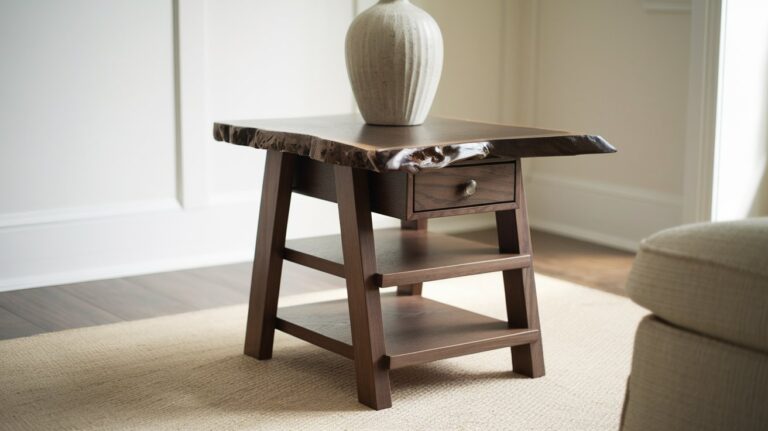
Live Edge Walnut Desk: Complete Guide & Best Options 2025
A live edge walnut desk represents the perfect fusion of natural beauty and functional workspace design. These handcrafted pieces showcase walnut’s distinctive grain patterns while maintaining the tree’s original edge contours, creating an authentic connection to nature in your office. With increasing demand for sustainable furniture in 2025, live edge walnut desks have become the preferred choice for professionals seeking both durability and aesthetic excellence.
Understanding Live Edge Walnut Wood Characteristics
American black walnut stands as the most prized hardwood for live edge desk construction, offering exceptional durability and striking visual appeal. The wood’s natural grain patterns feature rich chocolate browns, deep purples, and golden highlights that intensify with age. Live edge walnut maintains the tree’s original bark edge, preserving nature’s authentic growth patterns while providing a smooth, functional work surface.
The density of walnut wood, measuring 38 pounds per cubic foot, ensures your live edge walnut desk will withstand decades of daily use without warping or cracking. Unlike manufactured desks, each piece is completely unique, with grain patterns and edge contours that tell the story of the tree’s natural growth. This authenticity has driven walnut desk prices up 23% in 2024, making them both functional furniture and valuable investments.
Live Edge Walnut Desk Styles and Configurations
Modern live edge walnut desk with drawers designs combine natural beauty with practical storage solutions. Executive models typically feature built-in filing systems, while creative professional versions emphasize expansive work surfaces. The most popular configurations in 2025 include single-slab desks ranging from 60 to 96 inches in length, accommodating both home office and corporate environments.
Executive Live Edge Configurations
A live edge executive desk typically measures 72 to 84 inches in length with integrated storage compartments beneath the main surface. These premium pieces feature hand-selected walnut slabs with minimal sapwood, creating consistent coloration throughout the desk. Executive models often include custom metal bases with adjustable leveling systems, ensuring stability on uneven floors while maintaining the wood’s natural character.
Storage-Integrated Designs
Contemporary live edge desk with storage options incorporate hidden drawers and compartments that maintain the wood’s natural appearance. Craftsmen use traditional joinery techniques to embed storage solutions without disrupting the live edge’s organic flow. Popular storage features include soft-close drawer systems, integrated cable management, and removable organizer trays that maximize workspace efficiency.
Live Edge Walnut Desk Pricing and Market Analysis
The live edge walnut desk price varies significantly based on slab size, wood quality, and craftsmanship level. Entry-level pieces start around $2,200 for smaller 48-inch desks, while premium 84-inch executive models can exceed $8,500. Mid-range options typically fall between $3,800 and $5,200, offering excellent value for professional-grade workspaces with authentic walnut construction.
Market analysis from 2024 shows consistent price increases due to limited walnut timber availability and growing demand for sustainable furniture. Custom live edge walnut desk for sale options command premium pricing, with made-to-order pieces requiring 8 to 12 weeks for completion. Investment-grade desks from recognized craftsmen have appreciated 15% annually, making them attractive alternatives to traditional office furniture purchases.
Selecting the Perfect Live Edge Walnut Desk Top
Choosing an exceptional live edge desk top requires understanding walnut grade classifications and natural defect characteristics. Premium slabs feature consistent grain patterns with minimal knots or mineral streaks, while rustic grades embrace natural imperfections as design elements. The ideal desk top thickness ranges from 2 to 3 inches, providing structural stability while showcasing the wood’s natural edge contours.
Wood Grade Classifications
Select grade live edge walnut desk slabs exhibit uniform coloration with straight, consistent grain patterns throughout the surface. These premium pieces minimize sapwood inclusion and natural defects, creating sophisticated professional appearances. First and Second (FAS) grade walnut commands the highest prices but delivers unmatched visual consistency for executive office environments.
Natural Edge Preservation
Authentic live edge preservation requires specialized kiln-drying techniques that maintain the bark’s natural attachment while preventing insect infiltration. Professional craftsmen use stabilizing resins to strengthen weak areas without altering the wood’s appearance. Properly preserved edges should feel smooth to the touch while retaining their organic, unprocessed visual character that defines live edge furniture.
Construction Methods and Base Options
Professional live edge walnut desk construction employs time-tested joinery methods combined with modern engineering principles. Steel hairpin legs remain the most popular base choice, offering clean lines that complement the wood’s organic curves. Alternative base styles include powder-coated metal frames, solid walnut pedestals, and adjustable standing desk mechanisms that accommodate modern workplace ergonomics.
The attachment method between slab and base critically impacts long-term stability and wood movement accommodation. Figure-eight fasteners allow natural expansion and contraction while maintaining secure connections. Premium constructions include mortise and tenon joinery for wooden bases, ensuring structural integrity that matches the desk top’s longevity expectations.
Finishing and Maintenance Requirements
Proper finishing enhances walnut’s natural beauty while protecting against daily wear and moisture damage. Danish oil finishes penetrate deeply into the wood fibers, creating water-resistant surfaces that highlight grain patterns. Polyurethane topcoats provide superior durability for high-traffic workspaces, though they may slightly diminish the wood’s natural tactile experience.
Regular maintenance of your live edge walnut desk involves monthly conditioning with appropriate wood oils and immediate cleanup of spills to prevent staining. Avoid placing hot items directly on the surface and use coasters for beverages. Professional refinishing every 3 to 5 years maintains the desk’s appearance and protective coating, ensuring decades of reliable service life.
Customization and Personalization Options
Custom live edge walnut desk with drawers fabrication allows complete personalization of dimensions, storage configurations, and aesthetic details. Popular customizations include integrated wireless charging pads, hidden cable management systems, and personalized engravings that reflect individual or corporate branding. Custom sizing accommodates specific space requirements while maintaining proportional balance between desk top and base elements.
Technology Integration Features
Modern live edge desk customizations seamlessly integrate technology requirements without disrupting the wood’s natural appearance. Discrete power outlets can be installed within the desk surface, while USB charging ports integrate into metal base components. Cable management solutions include routed channels beneath the desk top and magnetic cable organizers that maintain clean workspace aesthetics.
Ergonomic Enhancements
Ergonomic customizations transform your live edge walnut desk into a health-conscious workspace that supports proper posture throughout extended work sessions. Adjustable height mechanisms accommodate sitting and standing positions, while custom keyboard trays maintain optimal wrist positioning. Monitor arms can be integrated into the base design, providing flexible screen positioning without cluttering the natural wood surface.
Sustainability and Environmental Impact
Choosing a live edge walnut desk supports sustainable forestry practices when sourced from responsibly managed woodlands. American walnut trees require 50 to 80 years to reach harvest maturity, making each piece a representation of decades of natural growth. Sustainable harvesting practices ensure forest regeneration while providing premium materials for future generations of craftsmen and woodworkers.
The environmental footprint of live edge furniture remains significantly lower than manufactured alternatives due to minimal processing requirements and local sourcing opportunities. Many live edge walnut desk for sale options utilize urban timber from removed trees, preventing waste while creating functional furniture. This urban forestry approach has grown 34% in 2024, supporting both environmental conservation and local economic development.
Installation and Setup Considerations
Professional installation ensures your live edge walnut desk achieves optimal stability and longevity in its designated workspace. The substantial weight of solid walnut slabs, typically 150 to 300 pounds depending on size, requires careful planning for delivery and positioning. Floor protection during installation prevents damage to existing surfaces while accommodating the desk’s significant mass.
Room environmental factors significantly impact walnut wood performance over time. Maintaining relative humidity between 30% and 50% prevents excessive expansion or contraction that could affect joinery connections. Temperature stability also contributes to long-term structural integrity, making climate-controlled environments ideal for preserving your investment in premium live edge furniture.
Related video about live edge walnut desk
This video complements the article information with a practical visual demonstration.
Frequently Asked Questions
How much does a quality live edge walnut desk cost in 2025?
Quality live edge walnut desk prices range from $2,200 for smaller 48-inch models to $8,500 for premium 84-inch executive pieces. Mid-range options typically cost $3,800 to $5,200, offering excellent value with authentic walnut construction. Custom pieces require 8-12 weeks for completion and command premium pricing due to personalized specifications.
What maintenance does a live edge walnut desk require?
Live edge walnut desks require monthly conditioning with wood oil and immediate spill cleanup to prevent staining. Avoid placing hot items directly on the surface and use coasters for beverages. Professional refinishing every 3-5 years maintains appearance and protective coating, ensuring decades of reliable service life.
How do I choose between different walnut grades?
Select grade walnut offers uniform coloration with minimal defects, ideal for executive environments. FAS grade provides the highest quality with consistent grain patterns. Rustic grades embrace natural imperfections as design elements, offering character at lower price points. Consider your aesthetic preferences and budget when selecting wood grades.
Can live edge walnut desks accommodate modern technology needs?
Yes, custom live edge walnut desks can integrate wireless charging pads, hidden cable management, and discrete power outlets without disrupting the wood’s appearance. USB charging ports integrate into metal bases, while routed channels beneath the surface manage cables cleanly. These features maintain workspace aesthetics while providing modern functionality.
Are live edge walnut desks environmentally sustainable?
Live edge walnut desks support sustainable forestry when sourced responsibly from managed woodlands. The minimal processing and local sourcing reduce environmental impact compared to manufactured alternatives. Urban timber utilization from removed trees prevents waste while creating functional furniture, with this practice growing 34% in 2024.
What base options work best with live edge walnut desk tops?
Steel hairpin legs offer clean lines that complement organic wood curves and remain the most popular choice. Powder-coated metal frames provide durability, while solid walnut pedestals create unified aesthetics. Adjustable standing desk mechanisms accommodate ergonomic requirements. Choose based on style preferences and functional needs.
| Key Aspect | Important Details | Benefit |
|---|---|---|
| Wood Quality | American black walnut, 38 lbs/cubic foot density | Decades of durability without warping |
| Price Range | $2,200 to $8,500 based on size and quality | Investment piece with 15% annual appreciation |
| Customization | Technology integration, storage, ergonomic features | Personalized workspace functionality |
| Sustainability | Responsibly sourced, minimal processing required | Lower environmental impact than manufactured alternatives |
| Maintenance | Monthly oil conditioning, professional refinishing every 3-5 years | Preserves beauty and extends lifespan |